
Metallimax
OneReam

Ream once.
Ream right.

An acetabular reamer designed for busy physicians, and for those who demand a technology that enables a single-ream technique directly to the planned size.
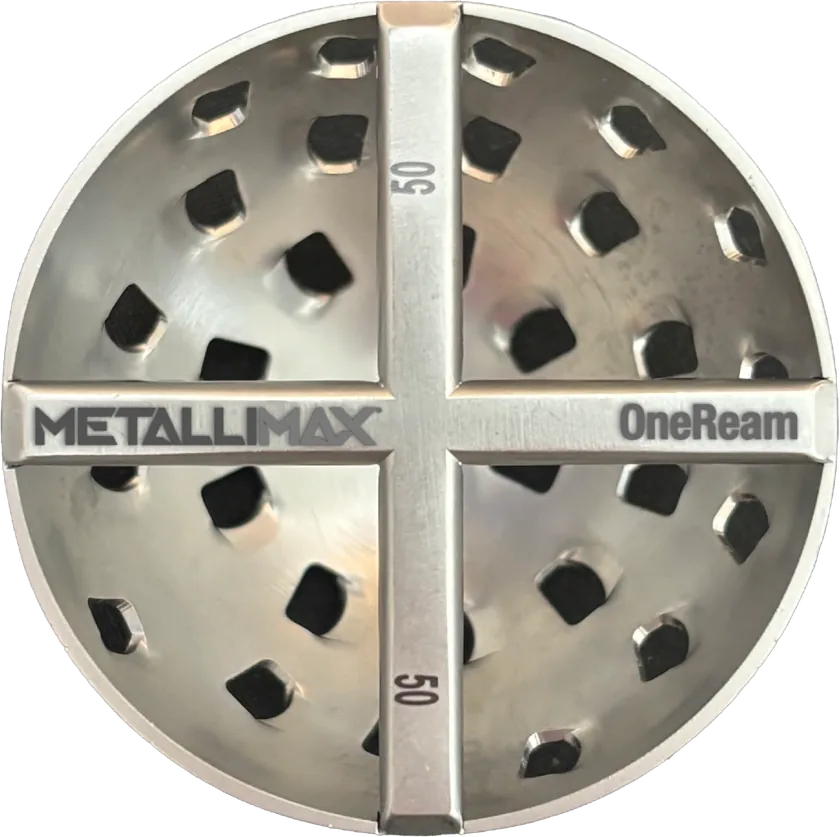
15 sizes · 44–58 mm±250 micronsStandard crossbar
OneReam Acetabular Grater

Known problems of overused reamers

Published research shows the high cost of worn acetabular reamers: more force, more time, smaller cavities, shallower cuts, more heat.1–4

3× force required
95–318%

Dull reamers require excessive force.3

Diametrical imprecision
−1.33mm

Dull reamers undersize the cavity.1

2× time required
+100%

Reaming time is doubled with used-up reamers.3†

Significant under‑reaming
−3.4mm

Dull reamers fail to reach the same depth.3

Thermal necrosis
65.1°C

Dull reamers can generate extreme temperatures.3,4

The answer: OneReam® Acetabular Grater System.

A cleaner cut, true to size

01

A smoother, cleaner cut

39%

lower average residual ridge height than a standard crossbar reamer.*6,7

02

Reduced torque

25%

lower peak cutting torque, a statistically significant reduction.*5,7

03

True to size

±250 µm

diametrical tolerance, still within tolerance after 143 cutting cycles.*7
Engineered for ease of use

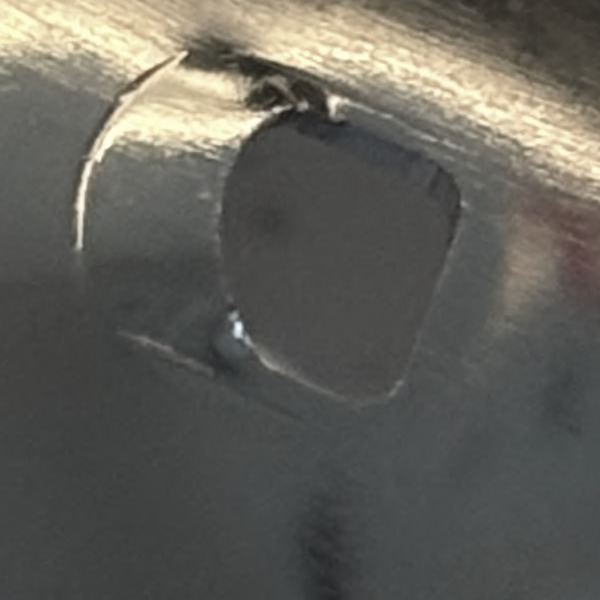
Close-up of OneReam bear claw teeth
“Bear Claw” teethProprietary scallop design for enhanced cutting action.
Finish
Electropolished surface

For superior capability.

Imaging
Traditional X-ray profile

Traditional hemispherical form and X-ray profile.

Drivers
Dual offset & straight handle compatible

Accessible for all surgical approach needs.

Fit
Standard crossbar design

Engineered to fit many drivers.

Sizing
Every millimeter covered

15 sizes, 44–58 mm, in 1 mm steps.

740

hips, single-reamer technique: no intraoperative acetabular fractures.8

A study of a surgical technique, not of OneReam.

Instructions for use & downloads

EVIDENCEClinical SummaryDownload PRODUCTBrochureDownload FAQCustomer FAQDownload
CARECleaning summaryPending publication
IFUInstructions for UsePending publication
One ream. To the right size.

Email or call Metallimax to order.

(772) 265-4681 · orders@metallimax.com · www.metallimax.com
Email us

References

  1. Slotkin S, Frisch NB, Roc G, Silverton CD. Hemispherical and minimally invasive total hip reamers: a biomechanical analysis of use and design. Arthroplasty Today. 2016;3(2):131–136. doi:10.1016/j.artd.2016.09.009
  2. Vaughan P, Johnston P, Keene G. Accuracy of acetabular reamers in total hip arthroplasty [abstract]. Orthop Proc. 2010;92-B(Supp III):396. doi:10.1302/0301-620X.92BSUPP_III.0920396b
  3. Sherman WF, Flick TR, Dranoff CS, Weintraub MJ, Kale NN, Sommi C, Sanchez FL. Variability of cutting and thermal dynamics between new and used acetabular reamers during total hip arthroplasty. Arthroplasty Today. 2021;7:91–97. doi:10.1016/j.artd.2020.12.002
  4. Eriksson AR, Albrektsson T. Temperature threshold levels for heat-induced bone tissue injury: a vital-microscopic study in the rabbit. J Prosthet Dent. 1983;50(1):101–107. doi:10.1016/0022-3913(83)90174-9
  5. Tecomet. TS-18-0008: Dynamic Torque and Cutting Efficiency Test for Redesigned Smooth Cut Acetabular Reamers. Internal test report; October 4, 2019.
  6. Tecomet. TS-18-0010: Size and Form, and Smoothness Verification Testing for Redesigned Smooth Cut Acetabular Reamer. Internal test report; February 24, 2019.
  7. Tecomet. Cross Bar Acetabular Reamer Technical Data Sheet. Doc #10008-01 Rev. B; August 2025.
  8. Woelfle CA, Lonza GC, Neuwirth AL, Cooper HJ. A single-reamer technique is an effective strategy for acetabular preparation in primary total hip arthroplasty. Arthroplasty Today. 2025;35:101841. doi:10.1016/j.artd.2025.101841

Notes

Known problems of overused reamers: references 1–4 are studies of generic new vs used reamers, not of OneReam. † Extra time allotted by study protocol, not measured.

* OneReam bench data (references 5–7) come from a reamer with cutting-tooth geometry, orientation and spiral arrangement identical to OneReam’s: 52 mm reamer, 30 PCF Sawbones, compared with a standard crossbar reamer. Bench results may not predict clinical performance. References 1–4 and 8 describe generic new vs used reamers, bone thermal thresholds in animals, and a single-reamer surgical technique; they are not studies of OneReam. Reamer size selection relative to the chosen implant is per the implant manufacturer’s surgical technique.

No surgical cutting device, including the OneReam Acetabular Grater, will maintain as-new performance after repeated use. In testing, the OneReam Grater maintained its tolerancing through 143 simulated cycles. This is not a predicted useful life for the product as a cutting device, nor a guarantee of performance.